

Bustier lingerie sits between a supportive bra, a fitted lingerie top and a light corset. It combines shaped cups with an extended torso, creating a smooth, continuous silhouette that can feel soft and romantic, structured and dramatic, or somewhere in between.
The best bustier is not simply the firmest one. Comfort, cup shape, boning, fabric stretch, closure placement and torso length all work together. This guide explains how a lace bustier, boned bustier and corset-style bustier differ, how to choose the right fit, and how to care for structured lingerie.
Quick answer: Choose a bustier by matching its cup support and torso length to your body first. Then compare fabric, boning and closure style according to the look and level of structure you want.
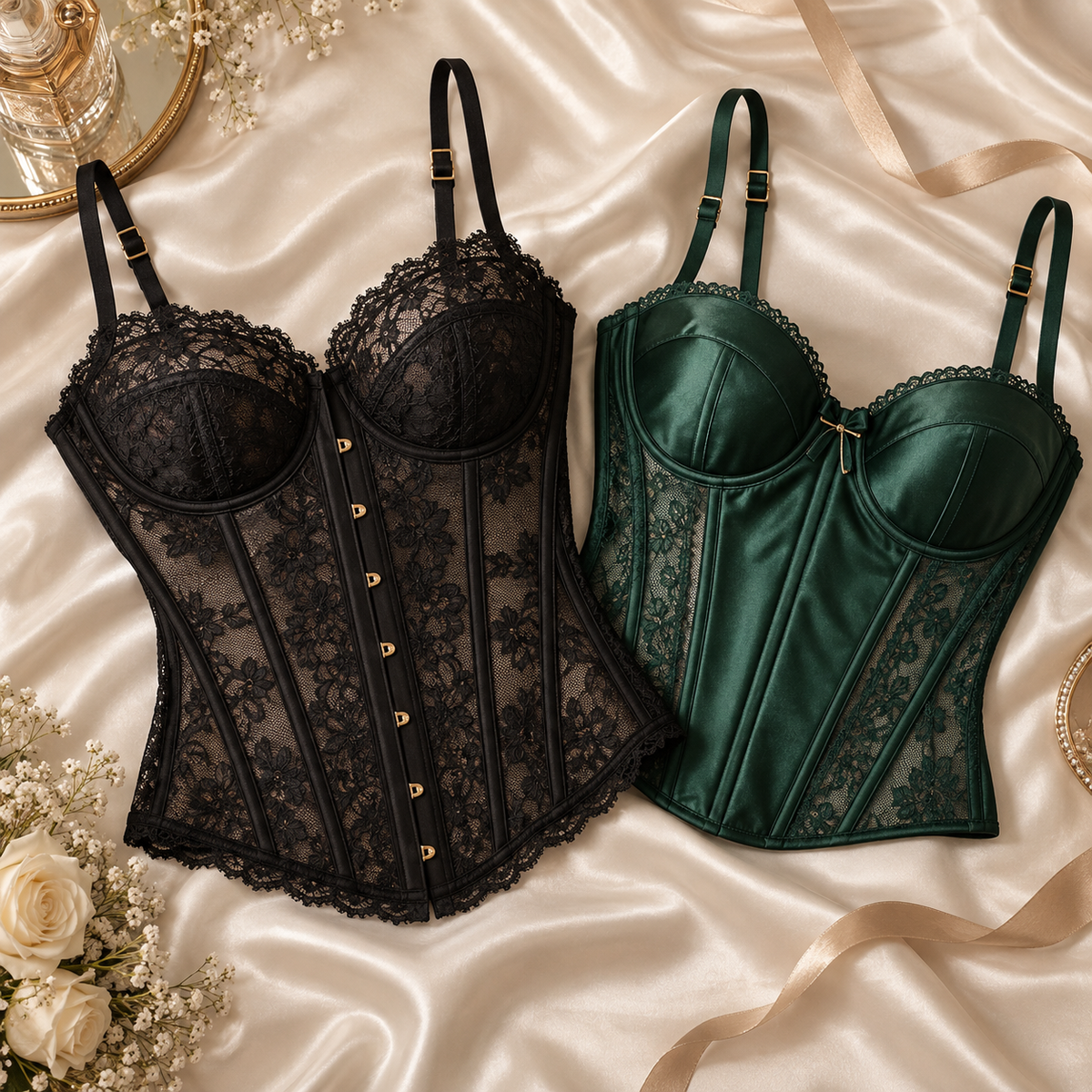
Explore structured lingerie, lace bustiers and corset-inspired designs in our corsets and bustiers collection.
What Is Bustier Lingerie?
A bustier is a close-fitting garment with cups and a bodice that extends below the bust. Unlike a standard bra, it uses the torso area as part of both its support system and its visual design. Vertical seams, flexible boning, lace panels, mesh inserts and decorative hardware can shape the overall silhouette.
Common bustier features include:
- Shaped, padded or underwire cups
- An extended bodice that reaches toward the natural waist
- Flexible boning or supportive vertical seams
- Adjustable shoulder or halter straps
- Hook-and-eye, zipper or lace-up closures
- Lace, mesh, satin, microfiber or PU leather panels
- Optional garter straps, matching panties or decorative chains
Not every bustier includes every feature. A soft lace bustier may emphasize flexibility and texture, while a boned bustier or leather-look corset top may create stronger visual lines.
Bustier vs Corset vs Longline Bra
These garments overlap, but they are not identical. Understanding the differences helps shoppers choose realistic support, fit and styling expectations.
| Style | Main purpose | Typical structure |
|---|---|---|
| Bustier | Cup support plus an extended decorative torso | Underwire, seams and light-to-medium boning |
| Corset | Torso shaping and a defined waist | More rigid panels, stronger boning and lacing |
| Longline bra | Bust support with a slightly longer band | Bra-style cups with limited torso coverage |
A corset bustier blends these categories. It may offer the cups and lingerie details of a bustier while borrowing boning, lacing or waist emphasis from a corset.
How Boning Changes Fit and Support
The word “boned” does not automatically mean rigid. Modern boned bustier lingerie may use flexible plastic stays, lightweight spiral support or sewn channels that help fabric stay smooth. The number and placement of these vertical supports matter as much as the material itself.
Soft structure
Soft bustiers rely on stretch mesh, lace and supportive seams. They move easily and usually feel closer to a longline bra or fitted lingerie top.
Medium structure
Flexible boning helps the bodice resist rolling and keeps vertical lines clean. This is a practical middle ground for shoppers who want a defined silhouette without traditional waist training.
Firm structure
A corset-style bustier may use thicker panels, more boning and a lace-up back. It can feel more sculpted, so accurate waist, bust and torso measurements become especially important.
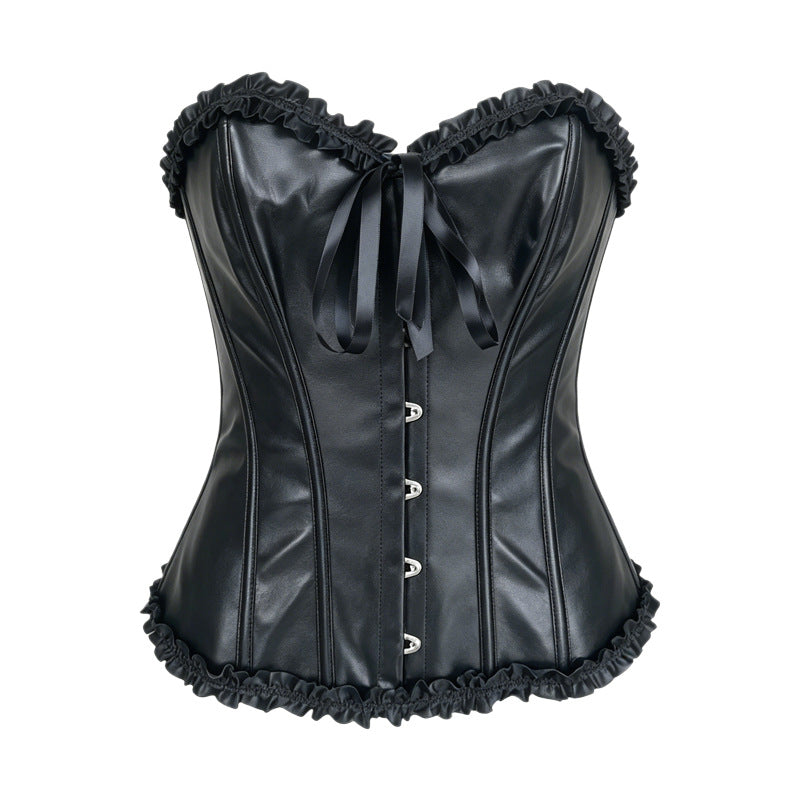
A lace-up waist cincher corset creates firmer visual structure than a soft lace bustier.
Choosing Fabric: Lace, Mesh, Satin or PU Leather
Fabric changes both appearance and feel. It also affects breathability, stretch and how clearly the garment’s seams and boning are visible.
- Lace bustier: Lightweight, decorative and ideal for a romantic or bridal-inspired look.
- Mesh bustier: Breathable and flexible, with a lighter visual profile.
- Satin bustier: Smooth and polished, often chosen for classic lingerie styling.
- PU leather bustier: Sleek and dramatic, with stronger contrast and a fashion-forward finish.
- Mixed-material bustier: Combines opaque and sheer panels to balance support, softness and visual texture.
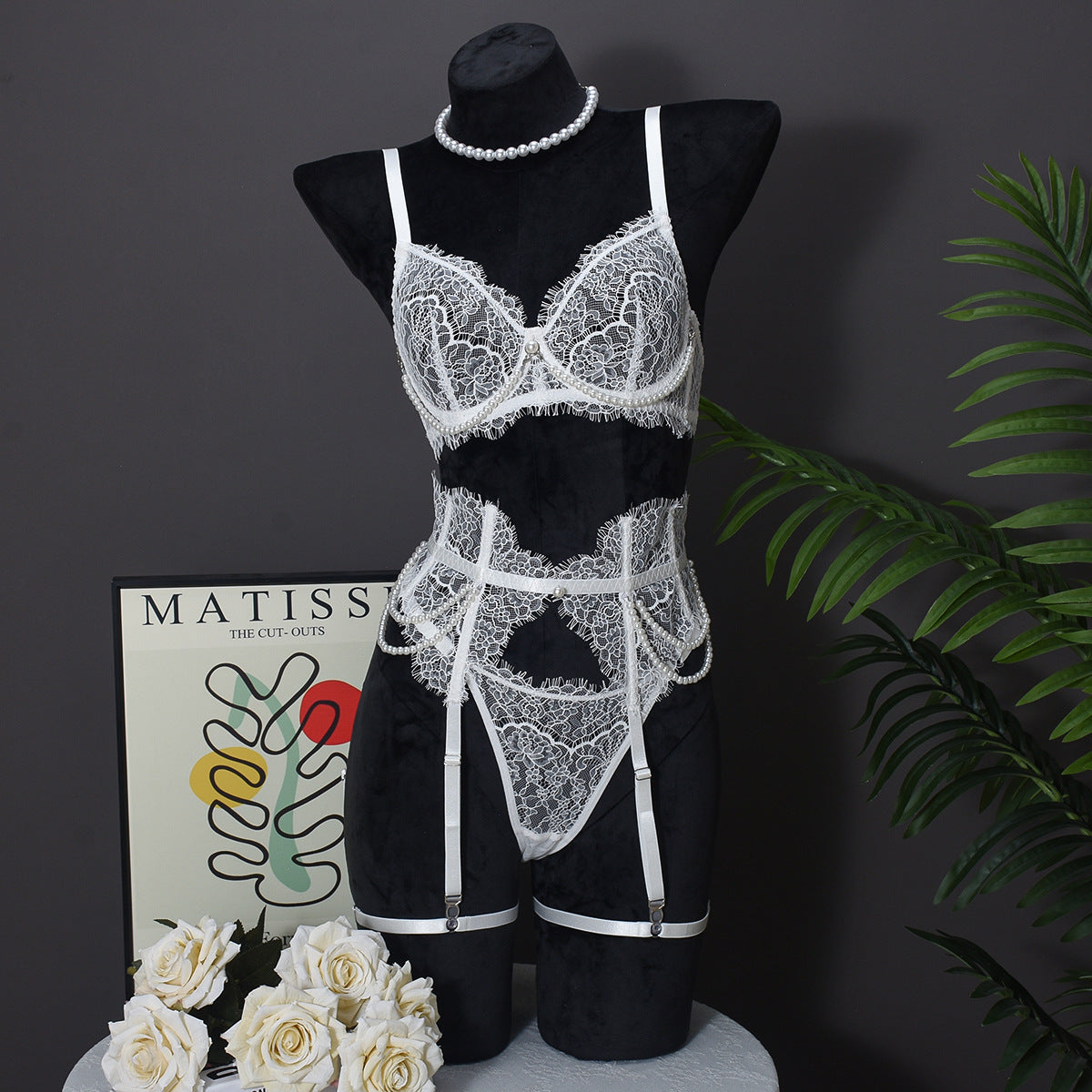
The eyelash lace bustier lingerie set shows how lace, pearl details and removable garter straps create a softer structured look.
How to Choose the Right Bustier Size
A bustier must fit both the bust and torso. Choosing only by ordinary top size can lead to cups that gap, a band that rides up or boning that sits in the wrong place.
- Measure the fullest part of the bust. Keep the tape level without compressing the body.
- Measure directly under the bust. This helps evaluate band and cup support.
- Measure the natural waist. Use the narrowest point of the torso unless the brand’s chart says otherwise.
- Check torso length. A longer bustier may suit one body perfectly but press into the hips on a shorter torso.
- Read the product-specific size chart. Do not assume two brands use identical sizing.
For plus-size bustier lingerie, look beyond the label. Wider straps, stronger closures, flexible side boning and multiple adjustment points may be more useful than a generic promise of “extra support.”
Styling Bustier Lingerie
Bustiers can function as intimate apparel, layering pieces or statement tops. Styling depends on fabric and construction:
- Pair a lace bustier with a robe or matching panties for a coordinated lingerie set.
- Wear a satin or opaque corset bustier beneath a blazer for an evening look.
- Combine a PU leather bustier with high-waisted trousers or a skirt for bold outerwear styling.
- Use detachable garters when desired, or remove them for a cleaner silhouette.
- Choose adjustable straps when changing necklines or layering pieces.
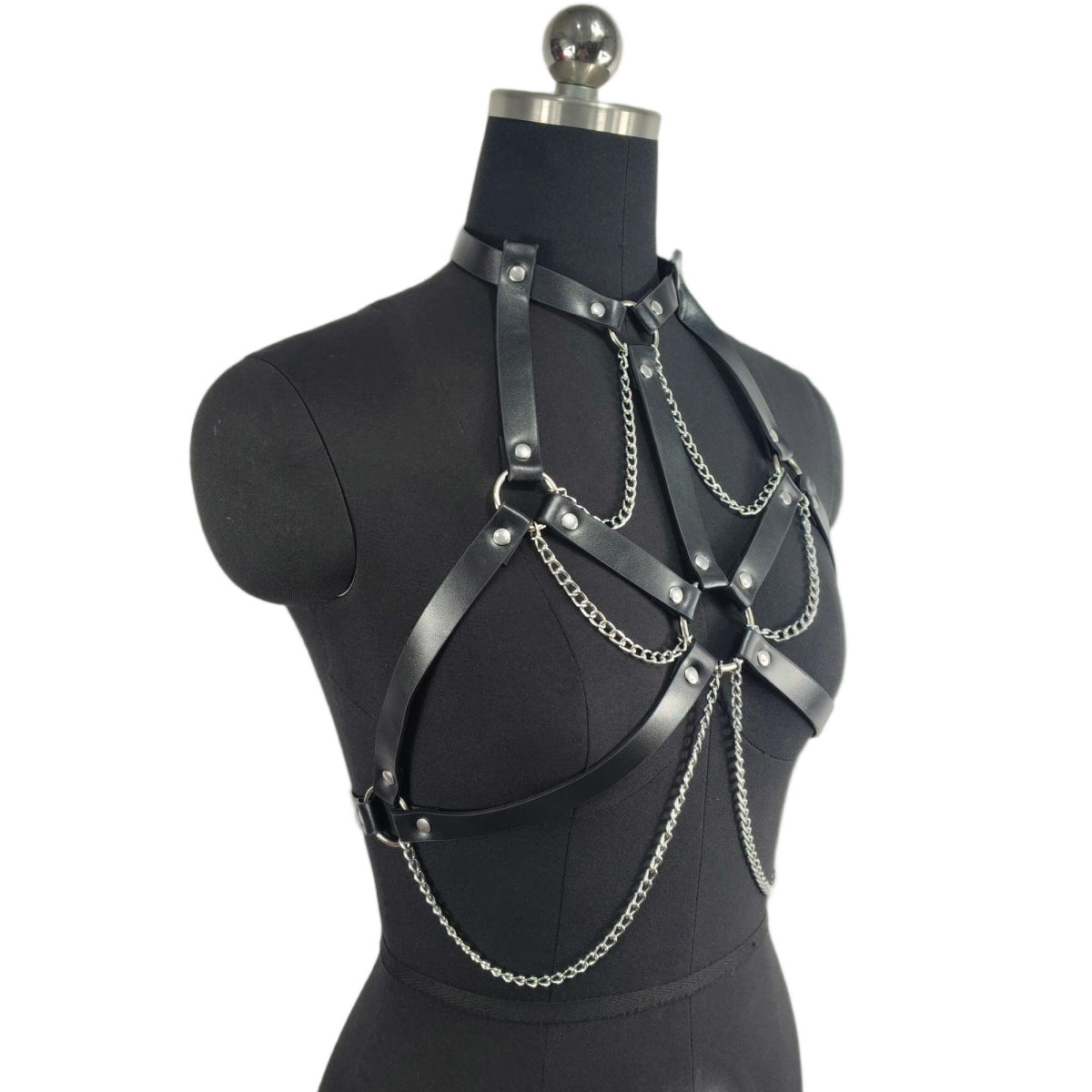
For a more dramatic silhouette, a black PU leather chain harness corset adds adjustable straps, hardware and sharper lines.
Comfort and Fit Checks Before Wearing
A supportive bustier should feel secure without causing numbness, sharp pressure or difficulty breathing. Before extended wear, check the garment while sitting, standing and moving.
- Cups should contain the bust without overflow or large gaps.
- Boning should follow the torso rather than digging into the ribs or hips.
- The back closure should remain level instead of riding upward.
- Straps should support without carrying the garment’s entire weight.
- The lower edge should not fold or press painfully when seated.
If a bustier feels uncomfortable at its loosest secure setting, sizing up or choosing a softer construction is usually more effective than forcing the fit.
How to Care for Structured Lingerie
Boning, molded cups, lace and decorative hardware can be damaged by aggressive machine washing. Always follow the garment label first. When no special instructions are provided:
- Fasten hooks before washing so they do not catch on lace.
- Hand wash in cool water with a mild detergent.
- Do not twist or wring molded cups and boned panels.
- Lay the bustier flat or hang it carefully to air-dry.
- Store it without crushing cups or sharply folding boning.
- Wipe PU leather with a soft damp cloth and keep it away from direct heat.
Frequently Asked Questions
Is a bustier the same as a corset?
No. A bustier usually focuses on bust support and decorative torso coverage. A corset generally places more emphasis on waist shaping and firmer construction, although corset bustiers combine elements of both.
Can bustier lingerie be worn as a top?
Many opaque bustiers can be styled as outerwear, but construction and coverage vary. Check the fabric, cup lining and closure before choosing a bustier top for public wear.
Does a boned bustier reduce the waist?
Light boning can smooth the garment and create a more defined appearance, but ordinary bustier lingerie is not the same as a waist-training corset. Product descriptions should clearly distinguish visual shaping from waist reduction.
What is the most comfortable bustier material?
Comfort is personal, but stretch lace and soft mesh usually allow more movement and airflow. Satin and PU leather may feel less flexible unless combined with stretch panels or adjustable closures.
Final Thoughts
The best bustier lingerie balances cup support, torso length, fabric and structure. A lace bustier offers softness and detail, a boned bustier creates cleaner lines, and a corset-style bustier delivers a more sculpted look. Start with accurate measurements, compare the size chart and choose the level of structure that suits how you want to wear it.
Browse the complete bustier lingerie and corset collection to compare lace, mesh, boned and leather-look styles.
Comments (0)